
Why Do I Wake Up in the Middle of the Night?
Some people struggle to fall asleep.
Others fall asleep without much difficulty, then wake during the night and find that their mind is suddenly active again.
The room is quiet.
Your body is still tired.
But unfinished conversations return.
Tomorrow’s responsibilities begin arriving too early.
Small concerns feel larger in the dark.
You may wake at two, three or four in the morning and wonder why something appears to have switched back on.
Brief waking can be normal
Sleep is not one continuous, unchanging state.
It moves through different stages during the night, and brief periods of waking can occur between them.
You may normally return to sleep without remembering that you woke.
The difficulty begins when you become fully alert, remain awake or start worrying about what the interruption means.
The wake-up may have been brief.
The mental activity that follows can extend it.
What happens after you notice you are awake
The moment you realise that you are awake, you may begin assessing the night.
What time is it?
How long have I been awake?
How many hours are left?
Will I be able to function tomorrow?
Why does this keep happening?
These questions are understandable, but they turn wakefulness into an urgent problem.
You are no longer simply awake.
You are measuring, predicting and trying to manage being awake.
Attention becomes more active at the exact moment you want it to settle.
Why thoughts can feel more serious at night
At night, there is less external context.
There are fewer tasks, conversations and distractions competing for attention.
A concern that appeared manageable during the day can therefore occupy much more of the available space.
An unanswered email becomes a serious problem.
A conversation requires another review.
A decision suddenly feels urgent.
A possible future difficulty feels as though it is already happening.
Night-time thoughts can feel convincing because there is little else around them.
But feeling urgent does not make a thought useful or accurate.
A tired mind working in darkness may not be the best place to make important decisions.
Stress can carry into sleep
A demanding day can affect the night even when you fell asleep without difficulty.
Your attention may still be carrying:
- Unfinished tasks
- Difficult conversations
- Work pressure
- Family responsibilities
- Financial concerns
- Decisions that remain open
- Things you are afraid of forgetting
When you wake naturally between sleep stages, the mind may reconnect with those concerns.
This does not necessarily mean that the concern woke you.
It may mean that once awake, your attention returned to whatever had remained emotionally active.
Stress is one possible contributor to repeated waking, but it is not the only one.
The sleep environment may be involved
External conditions can disturb sleep.
The room may be too warm or cold.
Noise may have increased.
Light may be entering the room.
The mattress or pillows may be uncomfortable.
A partner, child or pet may be moving.
These causes can be easy to overlook because you become aware only after waking.
Consider whether the waking happens at a similar time and whether something in the environment changes around then.
Alcohol, caffeine and other substances can affect the night
What helps you feel tired is not always what supports uninterrupted sleep.
Alcohol may initially make you feel sleepy but can contribute to disrupted sleep later.
Caffeine can remain active for hours.
Nicotine can also interfere with sleep.
Food, drinks and medicines may affect individuals differently.
If repeated waking has developed recently, consider whether anything in your evening habits or medication has changed.
Speak with a doctor or pharmacist before changing prescribed medication.
Physical causes should not be overlooked
Repeated waking can sometimes be connected with physical discomfort or another health issue.
Possible contributors include:
- Long-term pain
- Menopause
- Restless legs syndrome
- An overactive thyroid
- Some medicines
- Needing to use the toilet frequently
- Snoring or interrupted breathing
- Sleep apnoea
- Other physical or mental health conditions
The NHS guidance on insomnia lists stress and anxiety among common causes but also identifies environmental factors, substances, medicines and health conditions.
This is why persistent waking should not automatically be explained as overthinking or an inability to relax.
Avoid turning the clock into part of the problem
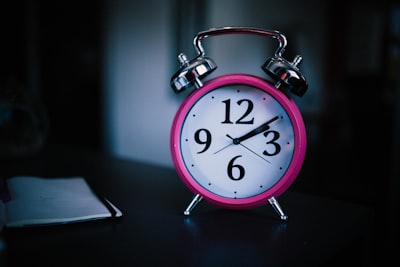
Repeatedly checking the time can increase pressure.
Each check begins another calculation:
If I sleep now, I can still get four hours.
Now it will only be three and a half.
Tomorrow is going to be ruined.
The clock becomes a continuing report on how badly the night is going.
If possible, keep it out of direct view and avoid checking your phone repeatedly.
You do not need to know the precise size of the sleep problem every few minutes.
Keep the night different from the day
If you wake, try not to turn the night into a new period of work, searching or problem-solving.
Keep lighting low.
Avoid opening messages or news.
Do not begin researching the concern that has entered your mind.
Postpone decisions until daytime.
You might remind yourself:
This may matter, but it does not need to be solved now.
Protecting the difference between night and day helps prevent a wake-up from becoming the beginning of tomorrow.
Name the process rather than following the thought
When thoughts arrive, notice what the mind is doing.
Planning.
Replaying.
Predicting.
Checking.
Worrying.
Naming the process can create a small amount of distance from its content.
You do not need to debate every thought.
You are recognising that a mode of thinking has become active.
A plan appearing in your mind does not require planning now.
A remembered conversation does not require another complete analysis.
A worry does not become urgent simply because it appeared at three in the morning.
Return attention to what is physically present
Bring some attention back from tomorrow or yesterday into the immediate environment.
Notice:
- The support of the mattress
- The feel of the pillow
- The weight of the duvet
- The temperature of the room
- A neutral sound
- The position of your body
- One slower exhalation
The aim is not to use the present moment as a trick for forcing sleep.
It is to reduce how much attention is being given to prediction, calculation and problem-solving.
You are allowing the night to contain less mental work.
If you remain awake
Do not demand that you lie perfectly still while becoming increasingly frustrated.
If you feel fully awake and remaining in bed is turning into a prolonged struggle, a quiet activity in low light may help until sleepiness returns.
Choose something undemanding rather than stimulating.
Avoid beginning work, checking social media or introducing new problems for the mind to process.
The intention is not to reward wakefulness or start the day.
It is to reduce the association between bed and an extended battle with sleep.
Support the next night during the day
The response to disrupted sleep does not begin only at bedtime.
Regular daytime movement, consistent waking times and exposure to daylight can support the body’s sleep pattern.
Try not to compensate for a poor night by allowing sleep times to become increasingly irregular.
The NHS recommends getting up at a consistent time, exercising during the day, relaxing before bed and keeping the bedroom dark and quiet.
Choose realistic habits rather than creating a perfect routine that becomes another source of pressure.
Notice the state you bring back to wakefulness
GuideState begins with the understanding that your state affects what you see, think, interpret, decide and do.
When you wake in an anxious state, ordinary thoughts may appear urgent.
When you are frustrated, wakefulness may feel like evidence that the entire night has failed.
When you are calmer, the same interruption may remain inconvenient without becoming catastrophic.
Ask:
What state am I in now?
How is it shaping what this wake-up appears to mean?
Is anything genuinely required at this moment?
What would help the night involve less effort?
You cannot guarantee immediate sleep.
You can reduce some of the pressure being added to wakefulness.
When to seek professional advice
Speak with a GP if sleep problems have continued for months, changing your sleep habits has not helped, or disrupted sleep is affecting daily life and making it difficult to cope.
Seek advice if you or someone else notices loud snoring, gasping, choking or interrupted breathing during sleep, or if pain, restless legs or another symptom is repeatedly waking you.
A GP can explore possible causes and recommend appropriate treatment or referral.
Do not drive when you feel sleepy.
A GuideState perspective
GuideState does not assume that every night-time waking has the same cause.
It asks:
What is happening?
What state follows the wake-up?
What practical, environmental or health factors may be involved?
How is that state shaping the thoughts that appear?
What would better support the return towards rest?
Sometimes the answer involves reducing pressure.
Sometimes it involves changing a habit or environment.
Sometimes it involves professional assessment.
Understanding comes before deciding on the strategy.
A quiet closing thought
Waking during the night does not automatically mean that something is wrong.
The difficulty often grows when the wake-up becomes a problem to measure, predict and solve immediately.
Keep the night quiet where you can.
Avoid making important decisions in the dark.
Let thoughts appear without treating each one as an instruction.
And if the pattern persists or affects daily life, seek help in understanding what may be contributing.
The aim is not to manage sleep perfectly.
It is to create conditions in which wakefulness receives less pressure and sleep has a better opportunity to return.
Explore the wider GuideState framework
Quiet Anxiety names the hidden strain of functioning while feeling unsettled inside.
Metacognition creates awareness of your thinking, while Metacogstate adds awareness of the state shaping it.
State-aware thinking uses that awareness to create better conditions for clearer judgement and greater choice.
GuideState brings these ideas together:
- Understand The State
- Practise The State
- Apply The Strategy